

Sleep tight but how?
Dr. Eric Montagne August 11, 2022 Advice, Conseils, Conseils, Non classifié(e), Uncategorized 0It makes you wonder if there is still anyone who sleeps well in this world.
I hear our world in “ed”: stressed, rushed, connected, industrialized, etc. In a word: exhausted.
Dr. Curtay, author of a great report on sleep, has compiled the frightening list of the consequences of a “sleep debt”[3] :
- A decrease in physical and intellectual performance, a decrease in libido.
- Vulnerability to stress, l’anxiété.
- Depression, with a risk multiplied by 4 in insomniacs[4].
- Psychological and behavioral problems : risks of impaired alertness and adaptive capacities, drowsiness and accidents of all kinds.
- A lack of drive control, excessive risk taking, an increased tendency to addictions. It has also been shown that jet lag promotes addiction to alcohol and tobacco..
- A decrease in immune defenses.
- A rise in inflammatory phenomena[5], risk factors for diabetes, cardiovascular pathologies and osteoporosis…
- Etc.
In front of such a dark board, I say that it is quite simply necessarylearn to sleep again.
Insomnia: The culprits aren’t even hiding !
Because if our sleep has lost in duration and quality compared to that of our grandparents, it means conversely that we can act to lengthen and improve it.
And if there’s one thing you can do to sleep better, it’s diet.
A study from the Columbia University Medical Center in New York[6] has just confirmed the influence of diet on sleep quality, identifying precisely Foods that keep us from sleeping well.
Participants were given a controlled diet for the first 4 days, then on the last day they could eat as they wished. They were due to go to bed at 10 p.m.
Conclusion of the study:
-
- The higher the fiber intake, the greater the duration of sleep (slow and deep).
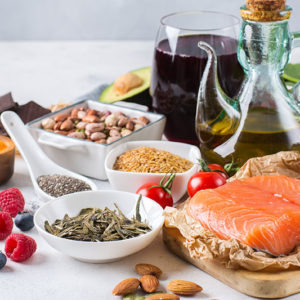
- The higher the saturated fat intake (meat, cold cuts, full-fat dairy products), the shorter the duration of sleep, always at slow waves (80% of sleep time), is important .
- The higher the sugar intake, the more there are “micro-awakenings” during the night.
- When the meal is composed by a nutritionist, participants also fall asleep faster, in 17 minutes compared to 29, when they are free to compose the menu of their choice.</ li>
This link between diet and quality of sleep had already been highlighted by a large-scale American study[7] which had shown that the more the diet is caloric, monotonous and poor in minerals and vitamins, the less we sleep.
You will say to me: nothing very new… But it is one thing to know it, it is another to apply it concretely, especially among the youngest.
On the other hand, the question of sleep is not limited to the speed of falling asleep or its duration: it must also be restorative. And there too certain foods influence the quality of sleep.
Be well with the night shift
Neurons release neurotransmitters, which are small chemical messengers.
Some are specific to the waking state: dopamine, adrenaline (increases pulse rate, force of muscle contraction, blood flow and respiratory capacity in response to stress) and < b>norepinephrine (promotes attention, learning and response to reward cues).
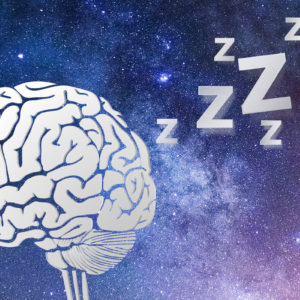 As you can imagine, it’s not with such a team that we’re going to fall asleep… So, so to speak, we have to replace all these little people and bring in the night team< /u>.
As you can imagine, it’s not with such a team that we’re going to fall asleep… So, so to speak, we have to replace all these little people and bring in the night team.
First stage: “pacemaker” neurons intervene to progressively deactivate the neurons that emit them. Then other neurotransmitters arrive.
There is serotonin which decreases (inhibits) the activity of excitatory neurons and allows the synthesis of melatonin “sleep hormone”, and GABA (gamma-aminobutyric acid ). It slows down the transmission of nerve signals, reduces muscle tone, slows heart rate, muscle spasms and helps control anxiety.
To these “simple” elements on neurotransmitters are added other complex elements that also control the speed of falling asleep, the quantity and quality of sleep: thyroid hormones, sex hormones, growth hormone but also blood levels of magnesium, calcium or potassium…
Amazing, right?
Well, it turns out that our little sleep night team, sorry, but it’s a bit the CGT historical period… Do what they ask, otherwise they won’t get started. work (and you, no need to hope to fall asleep)!
If you have trouble falling asleep
If sleep is late in coming it may be that your dopamine and adrenaline levels are too high and/or your melatonin and GABA levels are too low at bedtime.
It is usually the consequence of physical exercises practiced too late in the day, stress or poor food choices.
Coffee, tea, dark chocolate and cola can disrupt sleep up to 6 hours after ingestion, due to their content of xanthines, stimulating molecules.
Ideally, your dinner should provide some protein, sources of tryptophan and glutamic acid, the two amino acids needed to make serotonin, GABA and melatonin.
Good sources are obviously meat, fish and eggs.
But you have to add carbohydrates, digested slowly (“low glycemic index”). Indeed, carbohydrates allow the passage of tryptophan into the brain, where it can actually be transformed into serotonin and then into melatonin.
For example, we will choose sweet potatoes, lentils, red or white beans, basmati rice, buckwheat, millet, quinoa, chestnuts.
Some supplements can also have a soothing role:
-
- Melatonin: it is often used in case of jet lag, but since its secretion tends to decrease with age, it has also been shown to be effective, especially for those over 50. 0.3 mg to 2 mg of melatonin is sufficient to obtain a level comparable to that of a young adult: decreased time to fall asleep[8], improved quality of sleep and reduced awakenings nocturnal[9].
- 5-HTP is a derivative of tryptophan, an amino acid found in food that is a precursor to serotonin and melatonin in the brain. A dietary supplement of 5-HTP can facilitate relaxation and improve sleep[10]. A dose of 50 to 100 mg at bedtime is sufficient. 5-HTP should not be combined with psychotropic drugs such as antidepressants or anxiolytics.
- Magnesium plays a role in cell communication and the regulation of sleep/wake rhythms. Magnesium supplementation along with zinc and melatonin has been shown to improve sleep[11]. Magnesium threonate is said to be particularly beneficial as it increases magnesium concentration in the brain[12].
- Zinc also appears to play an important role in aiding sleep. It is involved in the production of serotonin and melatonin and increases the duration of sleep[13]. In case of zinc deficiency, the ability to dream and to remember our dreams is impaired.
Barely awake…already exhausted !
Unrestful Sleep… This is a common problem with age, due to a decrease in time spent in paradoxical sleep (the part of sleep where you dream and rest psychically).
 A vitamin B12 deficiency, even mild (a common situation among vegetarians and vegans), decreases the duration of REM sleep.
The problem can then be corrected by taking a dietary supplement of vitamin B12, only if it is methylcobalamin (and not cyanocobalamin)[14].
Another track, the time spent in REM sleep is overwhelmingly controlled by a hormone: growth hormone.
“Growth hormone is a peptide, or small protein, made in the brain at certain times of the day, especially at night. For its production to be maximum, the body needs to have all the necessary nutrients available. This is generally the case in our modern countries, with the exception of one amino acid (a small protein): glycine.[15]”</em >
Glycine is an amino acid found abundantly in only one food: collagen-based animal tissues.
It is therefore found in the skin, bones or joints of chickens, for example. The classic dish that contains the most is bone broth.
“Various studies have tested the effect of glycine or collagen supplementation on humans and all have shown health benefits. As for growth hormone, taking 6-7g of glycine (or 10-15g of collagen) before bed can increase hormone levels 3-4x growing! Sleep is then more restorative, regardless of age[16]. »
And to replace the alcohol that causes growth hormone levels to drop, a British study[17] suggests that a cherry juice cure, which contains melatonin, can improve sleep quality.
You can also drink a (small) glass of wine in the evening and take melatonin as a supplement. It’s also important to go to bed in a good mood…
Sleep well.
Consultez votre chiropraticien

“Pour un monde plus en santé”
Sources:
[2] Jean-Paul Curtay, les Dossiers de Santé & Nutrition, février 2016.
[3] Id.
[4] https://www.ncbi.nlm.nih.gov/pubmed/2769898
[5] Les troubles du sommeil sont associés à une élévation des cytokines, en particulier IL6 et TNF alpha et des marqueurs de l’inflammation comme la CRP. La privation de sommeil entraîne une montée de NF kappa B, le chef d’orchestre des voies de l’inflammation. L’élévation de ces marqueurs constitue des facteurs de risque de diabète, de pathologies cardiovasculaires et d’ostéoporose. À l’inverse, le rétablissement d’une seule nuit de sommeil réduit de moitié chez les femmes l’activation de NF kappa B, le chef d’orchestre de la réaction inflammatoire.
[6] St-Onge MP, Roberts A, Shechter A, Choudhury AR. Fiber and saturated fat are associated with sleep arousals and slow wave sleep. J Clin Sleep Med, 2016
[7] National Health and Nutrition Examination Survey
Grandner MA et al. Dietary nutrients associated with short and long sleep duration. Data from a nationally representative sample. Appetite 2013;64:71-80
[8]Van Geijlswijk IM1, Korzilius HP, Smits MG. The use of exogenous melatonin in delayed sleep phase disorder: a meta-analysis. Sleep. 2010 Dec;33(12):1605-14.
[9]Lemoine P, Nir T, Laudon M, Zisapel N. Prolonged-release melatonin improves sleep quality and morning alertness in insomnia patients aged 55 years and older and has no withdrawal effects. J Sleep Res. 2007 Dec;16(4):372-80.
[10]Sanchez S, Sanchez CL, Paredes SD, Rodriguez AB, Barriga – CIRCADIAN LEVELS OF SEROTONIN IN PLASMA AND BRAIN AFTER ORAL ADMINISTRATION OF TRYPTOPHAN TO RATS. Acta Physiologica 2009; Volume 195, Supplement 667
[11]Rondanelli M, Opizzi A, Monteferrario F, Antoniello N, Manni R, Klersy C – The effect of melatonin, magnesium, and zinc on primary insomnia in long-term care facility residents in Italy: a double-blind, placebo-controlled clinical trial. J Am Geriatr Soc. 2011 Jan;59(1):82-90.
[12]Abumaria, N., Yin, B., Zhang, L., Li, X. Y., Chen, T., Descalzi, G., Zhao, L., Ahn, M., Luo, L., Ran, C., Zhuo, M., & Liu, G. (2011). Effects of elevation of brain magnesium on fear conditioning, fear extinction, and synaptic plasticity in the infralimbic prefrontal cortex and lateral amygdala. J Neurosci, 31(42), 14871-14881.
[13]Jung KI. Associations of zinc and copper levels in serum and hair with sleep duration in adult women. Biol Trace Elem Res. 2012 Oct;149(1):16-21.
[14] Mayer G, Kröger M, Meier-Ewert K. Effects of vitamin B12 on performance and circadian rhythm in normal subjects. Neuropsychopharmacology. 1996 Nov;15(5):456-64.
[15] Alternatif Bien-Être N°116, mai 2016
[16] Kasai K, Kobayashi M, Shimoda SI. Stimulatory effect of glycine on human growth hormone secretion. Metabolism. 1978;27(2):201-8.
[17] Pigeon W.R., Carr M., Gorman C., Perlis M.L. Effects of a Tart Cherry Juice Beverage on the Sleep of Older Adults with Insomnia. J Med Food. 2010 Jun; 13(3): 579–583


