

Are fruit juices worse than Coke (Coca-Cola)?
Dr. Eric Montagne January 10, 2019 Advice, Non classifié(e), Uncategorized 0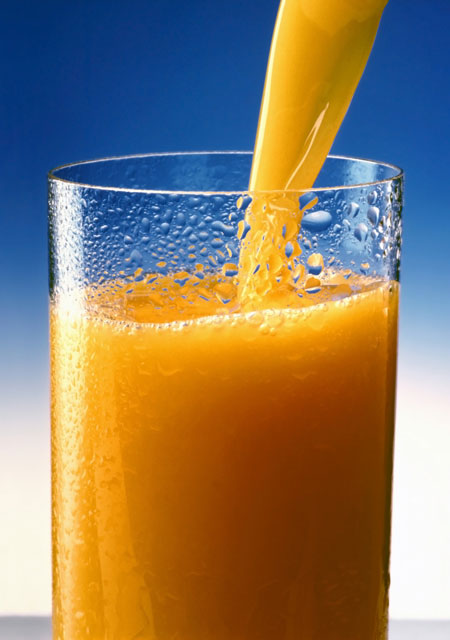 Fruit juices are considered healthy foods.
It is understandable to the extent that they contain the word “fruit”.
Nevertheless … what many people do not realize is that fruit juices are stuffed with fructose sugar – natural, of course, but with a chemical composition similar to table sugar (sucrose).
That’s why fruit juices are sometimes sweeter and contain more calories than sodas (Coke, Sprite etc.)
You be the judge:
- 350 mL of Coca-Cola contains 140 calories and 40 grams of sugar (the equivalent of 10 teaspoons)
- 350 mL of apple juice contains 165 calories and 39 grams of sugar
Of course, in fruit juices, we find small amounts of vitamin C, B1, B9, potassium, and antioxidants. But they are not enough to counterbalance all the sugar.
To tell the truth, your liver does not know the difference between a glass of Coca-Cola and a glass of orange juice …
Let’s look at what’s going on in our body
Think of the physical effort needed to eat an orange: we must chew, swallow, and digest. We eat one, maybe two, and then we feel full.
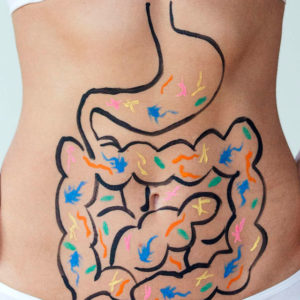 This digestive work helps the natural sugar of the whole fruit to enter our bloodstream little by little. Our body does not have any difficulty to maintain a normal sugar balance in our blood (= controlled blood sugar).
In counterpart, we can swallow the equivalent juice of two oranges without flinching. What happens then is that a large amount of easily assimilable sugar gets into the blood.
It creates a shock wave, a panic in our body.
Damaged that are almost irreversible
Although drinking a few glasses of orange juice is not harmful in the immediate future … I can assure you that the body will pay for it!
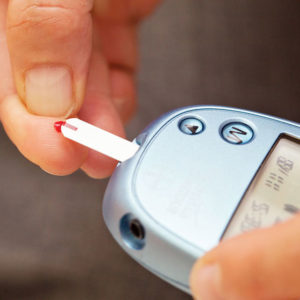 To compensate for the surge of sugar in our bloodstream, our pancreas must produce insulin “en masse” to return to a normal blood glucose level.
Excess sugar is stored by our liver as fat.
By drinking juices regularly and repeating these sugar shocks, our body will develop insulin resistance (pre-diabetes).
It is disaster for the cardiovascular health, for the liver, and the waistline. Diabetes and obesity are a vicious circle to avoid at all costs.
In one study, 480 mL of grape juice was given to participants each day. After just three months, they were fatter (increased waist size), and more insulin resistant.
Should we stop drinking juices?
 This is what I would suggest
Stop buying juices. End it.
But for these special moments
- a birthday breakfast
- a breakfast in a beautiful hotel
- a trip to Italy
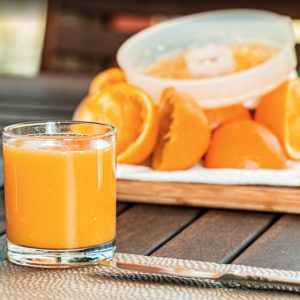
For those rare moments, indulge yourself with a freshly squeezed orange pressed right before your eyes – it’s so good!
The truth about supermarket orange juice
Oranges are harvested in Florida, for example. The juice is extracted rapidly. The juice is then stored in containers. Oxygen is removed during pasteurization of the juice. In this state, it will keep for a year! The counterpart is that the juice has almost no taste.
The containers are then shipped to our country. You should know that the majority of orange juice brands are supplied from the same plant.
Once arrived, the orange juice is “woken up” by adding the “flavour pack”.
All major brands have their own flavor pack that is a signature taste. This allows to sell a similar tasting juice from years to years. Like Chanel N°5 perfume, this taste signature has been developed by flavour specialists “for your pleasure”.
Then they can:
- Reinject the pulp, for those who prefer “with pulp”
- Mix with other fruit juices
What are you going to do?
Consult your chiropractor

” For a healthier world “
Sources:
Sources: 1-https://www.thelancet.com/journals/landia/article/PIIS2213-8587(14)70013-0/fulltext. 2-http://nutritiondata.self.com/facts/fruits-and-fruit-juices/1971/2. 3-https://www.ncbi.nlm.nih.gov/pubmed/15969493. 4-https://www.ncbi.nlm.nih.gov/pmc/articles/PMC2844681/. 5-https://www.ncbi.nlm.nih.gov/pubmed/23810279. 6-https://www.ncbi.nlm.nih.gov/pubmed/7498104. 7-https://www.journal-of-hepatology.eu/article/S0168-8278(08)00164-5/abstract. 8-https://nutritionandmetabolism.biomedcentral.com/articles/10.1186/1743-7075-2-5. 9-http://diabetes.diabetesjournals.org/content/54/7/1907.short. 10-https://www.ncbi.nlm.nih.gov/pubmed/20439553. 11-https://www.huffingtonpost.com/2011/07/29/100-percent-orange-juice-artificial_n_913395.html


